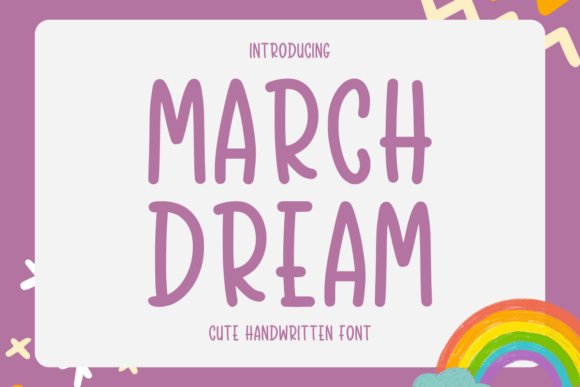
March Dream
H2: First Impressions and Visual Personality
The first time I saw March Dream, I felt a quiet confidence. It’s not the kind of script that screams for attention—it whispers with elegance. The letterforms are fluid yet structured, giving it a sense of sophistication that feels both modern and timeless. There’s a softness in its curves, but never a lack of clarity. It carries a dreamlike quality, making it ideal for projects that want to evoke warmth, creativity, or a touch of romance.
H2: Where Does March Dream Belong?
March Dream is a display font at heart, but it has enough legibility to work in more practical applications. It naturally fits into branding for lifestyle brands, creative studios, wedding planners, and boutique businesses. Its personality aligns well with editorial design, social media graphics, and packaging that needs to feel personal yet professional.
H3: Real-World Use Cases
In logo design, March Dream can be a standout element when used sparingly—perhaps as a tagline or brand mark. It works especially well when paired with a sans serif font for contrast. For brand identity, it adds a layer of character without overwhelming the overall system. When designing product labels or packaging, it brings a handmade feel that can elevate the perceived value of the item.
On posters and flyers, March Dream can create a visual anchor. It’s not too heavy, so it doesn’t dominate the layout but still commands presence. In invitations, it adds a touch of elegance that feels fitting for weddings, art events, or cultural gatherings. For digital ads and social media graphics, it’s versatile enough to work across platforms while maintaining readability.
H2: Readability and Practical Considerations
Readability is a key factor in any font choice. March Dream performs reasonably well in most contexts, but it’s not without its limitations. At smaller sizes, some of the delicate serifs can become less distinct, which means it should be used carefully in body text. Testing it in black and white is essential to ensure it holds up under different lighting conditions and print outputs.
When using March Dream in web design, it’s important to consider how it renders on different screens. While it looks great on high-resolution displays, it may not always render perfectly on lower-end devices. Pairing it with a reliable sans serif font for supporting text ensures a balanced typographic hierarchy.
H3: Font Pairing and Design Assets
Pairing March Dream with a clean sans serif like Montserrat or Lato creates a strong contrast that highlights its decorative qualities. For a more elegant look, pairing it with a serif font like Playfair Display can add depth and sophistication. When working with other script fonts, be mindful of the overall balance—too many scripts can make a design feel cluttered.
Designers should also test March Dream against handwritten fonts for a more organic feel, or against display fonts for a bolder statement. It’s particularly effective in Canva templates, Cricut projects, and printable designs where a handcrafted aesthetic is desired.
H2: Commercial Use and Licensing
As a premium font, March Dream is suitable for commercial use, but it’s crucial to confirm the licensing terms before deploying it in client work or business assets. Always check whether the font allows for use in print, digital, and web environments. Proper licensing ensures that your design assets remain compliant and professional.
H3: Brand Consistency and Audience Trust
A font plays a subtle but powerful role in shaping audience perception. March Dream contributes to a brand’s visual personality by adding a touch of creativity and approachability. However, it’s not the kind of font that should be overused. Over-reliance on script fonts can lead to a lack of consistency, especially in larger brand systems.
For brand identity, March Dream is best used as a complementary element rather than the primary typeface. It enhances the visual storytelling without overshadowing the core messaging. This makes it an excellent choice for secondary text, headers, or decorative accents in a broader typographic palette.
H2: Final Thoughts and Designer Notes
March Dream is a font that invites creativity and offers versatility. It’s not just another script—it’s a thoughtful addition to a designer’s toolkit. Whether you’re crafting a logo, designing packaging, or creating social media graphics, March Dream has the potential to elevate your work with its unique character and visual appeal.
Before finalizing your design, always test the font in various contexts. Check small-size readability, review spacing, and compare it with other typefaces to ensure it complements your overall design language. With the right pairings and careful application, March Dream can become a valuable asset in your creative process.